Differentiated diagnosis and treatment of kidney tonification: Precautions for the use of Liuwei Dihuang Wan and details on prostate protection
The kidneys store our vital essence, and human survival depends entirely on this essence, much like the relationship between fish and water. Fish die without water, and humans die without vital essence. Under the multiple pressures of modern society, many men suffer from insufficient vital essence, making kidney tonification a key health concern. When it comes to kidney tonification, Liuwei Dihuang Wan (Six-Ingredient Rehmannia Pill) is a familiar formula, a fundamental formula for nourishing kidney yin and a well-known prescription that has been passed down through generations. The balance between yin and yang in the kidneys is crucial. If kidney yin is insufficient, yang, without the restraint of yin, will rise to the upper body, generating deficiency heat. Such men often feel heat in the upper body and restlessness in the lower body. For example, some men frequently experience insomnia, a dry throat at night, and a thirst; others feel burning sensations in the soles of their feet, needing to immediately remove their shoes and socks upon returning home; some also experience frequent heel pain-all manifestations of kidney yin deficiency. If you experience any of these symptoms and confirm kidney yin deficiency, you should consider taking Liuwei Dihuang Wan.
Some men, feeling they have kidney deficiency, take Liuwei Dihuang Wan (a traditional Chinese medicine) for two months without even understanding what kind of deficiency they have, only to find their condition worsens. If you experience lower back pain, and feel a cold sensation in your lower back when it hurts, this is actually a typical case of superficial deficiency of kidney yang. Kidney yang is the root of all yang energy in the body; if kidney yang is deficient, you will also experience a feeling of coldness throughout your body. Taking Liuwei Dihuang Wan at this time will undoubtedly worsen the condition. So, how should people with kidney yang deficiency tonify their kidneys? I recommend a prescription called Jin Kui Shen Qi Wan (a traditional Chinese medicine formula), which can warm and tonify kidney yang. In fact, Liuwei Dihuang Wan is derived from Jin Kui Shen Qi Wan, the latter only adding aconite and cinnamon. Although it only adds two herbs, the nature of the prescription is completely different. Because cinnamon and aconite are warming herbs, they can balance the coldness in Liuwei Dihuang Wan, thus warming and tonifying kidney yang. In short, men must take good care of their kidneys and not blindly tonify them. First, identify the cause of your kidney deficiency, and then prescribe medication accordingly.
We previously mentioned that "the kidneys are the yang of the body," leading some to believe that kidney deficiency causes poor sexual function, and that taking kidney-tonifying medicine can improve virility. This view is not uncommon. However, improving virility is not so simple. In Traditional Chinese Medicine (TCM), the kidneys are not merely a physical organ, but a collective term for the kidneys and a series of related functions. Pathological changes in a person's spirit, bones, hair, and teeth can all be closely related to the kidneys, encompassing a broader range than in Western medicine. The essence of the kidneys can be divided into kidney yin and kidney yang, which are interdependent and mutually restrictive, maintaining the body's dynamic balance. When this balance is disrupted, pathological changes occur where kidney yin or yang is deficient or excessive. Clinically, kidney yin deficiency is more common than yang deficiency; therefore, the idea that tonifying the kidneys equals improving virility is a misconception. The symptoms of kidney yang deficiency include a pale or dark complexion, soreness and coldness in the lower back and knees, cold limbs, fatigue, general weakness, impotence, premature ejaculation, loose stools or frequent, clear urination, nocturia, pale tongue with a white coating, and diarrhea before dawn. The symptoms of kidney yin deficiency include a flushed complexion, soreness and pain in the lower back and knees, dizziness and tinnitus, loose teeth and hair loss, seminal emission, premature ejaculation, insomnia and forgetfulness, dry mouth and throat, irritability, sweating upon exertion, flushed cheeks in the afternoon, emaciation, scanty and yellow urine, and a red tongue with little or no coating. Treatment and self-care must be tailored to the specific symptoms to achieve the desired effect. In terms of diet, when feeling weak and fatigued, eat more iron- and protein-rich foods such as black fungus, dates, and black-boned chicken. Those with indigestion can drink more yogurt and eat hawthorn. Many foods have kidney-tonifying effects, among which lamb back bone soup is the simplest, most practical, and economical. Regular waist exercises can also help protect and strengthen the kidneys. In addition, sufficient sleep is also an important guarantee for restoring energy and spirit. No matter how busy you are at work or how many worries you have at home, you must rest on time.
Many men experience symptoms such as frequent urination at night, lack of energy, lower back pain and weak legs, insomnia and vivid dreams, chest tightness and shortness of breath, tinnitus and hearing loss, hair loss and loose teeth, susceptibility to colds, and cold limbs. These are actually manifestations of kidney deficiency. Surveys show that, besides age, the following types of men are prone to kidney deficiency: (1) Frequent smokers and drinkers. (2) Men with irregular lifestyles and diets. (3) Men with busy work schedules and high stress levels. (4) Men who drink strong tea. (5) Men who spend long hours on computers. (6) Men who sit for long periods. (7) Men who have frequent sexual activity. (8) Men who frequently take fast-acting aphrodisiacs. (9) Patients recovering from illness.
In our minds, middle-aged and young men are synonymous with strength and vigor, and prostate disease is something unrelated to this group, as we've always considered it a disease of the elderly. However, the reality is quite different. Recent clinical data shows that the incidence of prostate disease is increasingly affecting younger people. Surveys indicate that 60% of prostate disease patients are white-collar workers. These white-collar workers, who sit in offices all day in suits and ties and are extremely meticulous about personal hygiene, why are they so susceptible to prostate disease? This is due to the sedentary work and lifestyle of white-collar men. Traditional Chinese medicine believes that "prolonged sitting is harmful to health." For white-collar workers who work nine-to-five, sitting for eight hours or more a day is common. Prolonged sitting, coupled with a lack of physical activity, obstructs the flow of qi and blood, easily causing congestion in the male genital area, leading to prostate congestion, swelling, and inflammation. In addition, due to increasingly fierce social competition and a faster pace of life, white-collar workers are experiencing greater and greater work pressure, which can lead to them being in a state of excessive tension and mental fatigue all day long. Over time, this can result in decreased prostate function, reduced libido, and ultimately, male dysfunction.
To prevent prostate disease, you must start by changing your lifestyle: (1) Reduce stress appropriately. Men who are under a lot of stress at work are more likely to develop prostate disease. Therefore, you should relax and relieve stress during your free time. (2) Eat a healthy diet. Do not drink alcohol or drink less alcohol, eat less spicy and stimulating food, and reduce the intake of greasy food and unsaturated fatty acids. Eat more vegetables and fruits with high lycopene content. (3) Exercise appropriately. Do not sit for long periods of time or ride a bicycle for long periods of time. It is best to develop the habit of getting up and moving around frequently at work and do more relaxation activities. (4) Have regular check-ups and self-tests. Here are some practical health tips for men: (1) Take a warm bath. Taking a warm bath can relieve muscle and prostate tension. (2) Stay away from coffee, spicy food and alcohol. (3) Drink more water and urinate more often to keep bowel movements regular. (4) Relax more. When life stress is reduced, prostate symptoms will often be relieved. (5) Have appropriate sexual activity, avoid excessive sexual activity and do not masturbate. Men should take good care of this organ unique to men and never wait until signs of infidelity appear before they start to panic.

A Complete Guide to Male Health Exercises and Wellness Techniques
This book provides a detailed introduction to the complete set of male health exercises, including "Hands to the Chest," "Arms Stretching Across the Body," and "Tiger Pouncing on Its Prey." It combines breathing and mental focus to help regulate the body, mind, and breath, improve physical condition, and strengthen muscles and bones, providing a scientific and systematic daily health maintenance method for men.
2026-03-24
Men's Health Slow Static Stretching Exercises Full Body Flexibility Training Guide
This article introduces slow, static stretching exercises suitable for daily practice. Through multiple simple movements, it improves flexibility and joint range of motion, helps relax muscles, and prevents soreness. The content scientifically analyzes the key points of each movement, making it a practical reference for those interested in men's health and exercise.
2026-03-24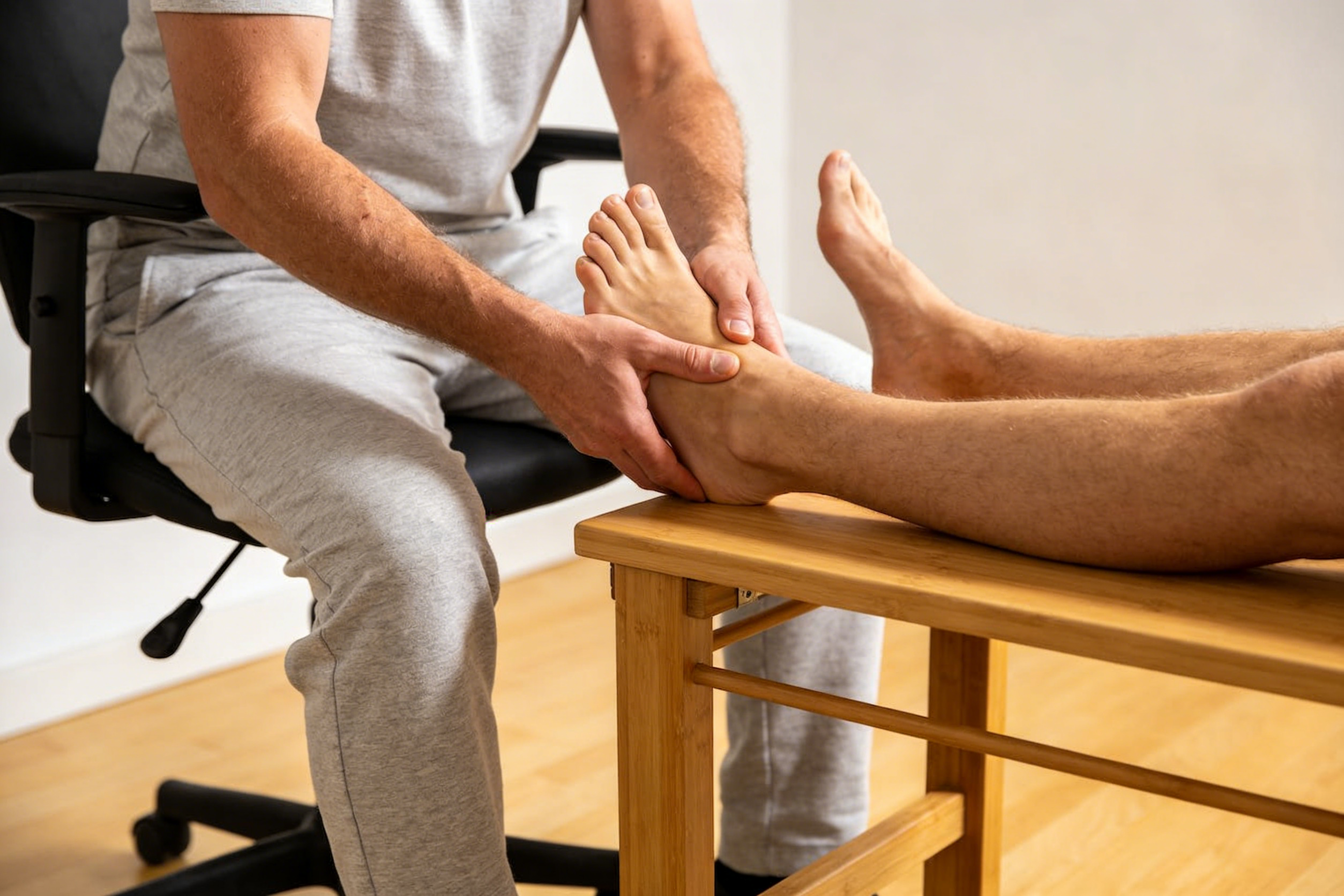
Men's health foot massage roller exercise method
This article introduces simple foot massage exercises using foot rollers and wooden sticks to promote blood circulation and metabolism, helping to relieve fatigue and strengthen lower limbs. The content analyzes the principles and methods from a health perspective, serving as a reference for those interested in men's health and daily maintenance.
2026-03-24