
Article 150: Medicinal Diets and Daily Precautions for Chancroid and an Overview of Syphilis
◇A Guide to Caring for Your Husband's Health as a Good Wife◇
Next chapter: CHANG JIAN BING DE ZHI LIAO YU TIAO YANG
Treatment and recuperation of common diseases
Medicinal diet for treating chancroid
1. Gypsum Horn Cake: 60g gypsum, 60g buffalo horn powder, 10g anemarrhena, 10g peony bark, 15g indigo leaves, 200g flour, and appropriate amount of rock sugar. Decoct the gypsum, buffalo horn powder, anemarrhena, peony bark, and indigo leaves in water for 30 minutes. Remove the dregs and keep the liquid. Add an appropriate amount of rock sugar and simmer briefly until dissolved. After the liquid cools, mix it with flour and bake the cakes using the usual method. Consume in 2-3 servings.
2. Braised Oysters with Arrowhead: 100g oyster meat, 200g fresh arrowhead, seasonings as needed. Wash the oyster meat and arrowhead, and slice them. First, stir-fry the oyster meat until half-cooked, then add the arrowhead and stir-fry together. Add seasonings and clear broth, bring to a boil over high heat, then simmer over low heat until the sauce thickens and it's ready to serve.
3. Imperata cylindrica and mung bean drink: 30g fresh Imperata cylindrica root, 15g Alisma plantago-aquatica root, 50g mung beans, 20g rock sugar. First boil the Imperata cylindrica root and Alisma plantago-aquatica root for 20 minutes, then remove the dregs. Add the mung beans and rock sugar, and boil until the mung beans split open and the skins peel off. Filter out the dregs and drink when warm.
4. Viola yedoensis and Patrinia scabiosifolia tea: 30g Viola yedoensis, 30g Taraxacum mongolicum, 30g Patrinia scabiosifolia, and appropriate amount of rock sugar. Wash all the herbs, add 700ml of water and decoct to 400ml, remove the dregs, add appropriate amount of rock sugar, and drink warm, 200ml each time, twice a day.
Why does chancroid heal on its own?
The mechanism of spontaneous remission in this disease is generally believed to be that infection with Haemophilus ducreyi triggers both non-specific and specific immune responses in the body. The skin and mucous membranes, acting as natural barriers, have a certain bactericidal effect. Macrophages phagocytose cells. Complement, lysozyme, and properdin in body fluids can inhibit or kill bacteria, or enhance the phagocytic activity of phagocytes. Humoral and cellular immune responses may play a role in killing Haemophilus ducreyi. Therefore, many patients can recover spontaneously without any treatment.
What should we pay attention to in daily life?
1. Sexual activity is prohibited during treatment, and sexual partners should be monitored and treated regardless of whether they have symptoms.
2. Pay attention to local hygiene and avoid self-inoculation.
3. Regularly disinfect items that have come into contact with the patient's affected area.
4. If treatment is ineffective, the diagnosis and the type and dosage of medication should be considered to ensure they are correct. If necessary, a drug sensitivity test should be performed.
5. Apply topical medication on time and bandage properly to avoid friction and irritation.
6. Pay attention to your diet and avoid spicy, rich, and greasy foods.
syphilis
Syphilis is a chronic systemic infectious disease caused by Treponema pallidum. It can affect almost any organ in the body, producing a variety of symptoms. The disease is characterized by its long course and latent nature. Early syphilis primarily affects the skin and mucous membranes, while late-stage syphilis, in addition to affecting the skin and mucous membranes, can also easily invade the heart and central nervous system.
Transmission routes
1. Sexual contact: This is the most common route of transmission, accounting for over 90% of cases. Untreated syphilis patients are most infectious within the first year after infection, with infectivity decreasing as the disease progresses. By four years after infection, sexual contact is generally no longer infectious. These patients have a large number of Treponema pallidum bacteria on their skin and mucous membrane lesions, making them easily infected through lesions on the skin and mucous membranes of sexual partners.
2. Transplacental transmission: This refers to the transmission of syphilis from a pregnant woman with syphilis to the fetus in the uterus through the placental bloodstream. Therefore, it is also called congenital syphilis. Even if a woman with untreated syphilis has had the disease for more than 4 years and is no longer infectious through sexual contact, the infection can still be transmitted to the fetus during pregnancy. The longer the disease duration, the lower the infectivity. Some scholars believe that if mothers with early (primary and secondary) syphilis do not receive treatment, half of their infants will develop transplacental syphilis, and the other half will be stillborn or die shortly after birth. For mothers with untreated early latent syphilis, 20% of their infants will be normal or healthy, 20% will die, and 40% will have transplacental syphilis. For mothers with untreated late-stage syphilis, 70% of their infants will be normal or healthy, 10% will have transplacental syphilis, and the rest will be stillborn or premature. Infants with early congenital syphilis generally suffer from malnutrition, have many wrinkles on their skin, and in severe cases, have an aged appearance. They may also have anemia and enlarged liver and spleen.
3. Transfusion infection: Early syphilis patients can be infected through blood transfusions if they are blood donors.
4. Transmission through close contact: Kissing, breastfeeding, and the birth canal during childbirth can all lead to infection. It can also be transmitted through clothing, towels, razors, tableware, cigarette holders, bedding, sheets, doorknobs, toilet seats, and medical equipment.
What are the symptoms?
Syphilis can be classified into acquired and congenital syphilis based on its transmission route, and into early and late syphilis based on its infectivity.
(a) Acquired syphilis
1. Primary Syphilis: This is the early stage of syphilis and is highly contagious. The main symptom is a chancre, which mostly occurs in the genital area. In men, it is often found on the foreskin, coronal sulcus, frenulum, or glans penis. In homosexual men, it is commonly found in the anus, anal canal, or rectum. In women, it is often found on the labia majora and minora, cervix, or breasts, and in rare cases, on the tongue. After sexual intercourse, Treponema pallidum enters the body, first multiplying locally and causing inflammatory infiltration. Then it enters the lymphatic vessels and can invade nearby lymph nodes within hours, entering the bloodstream. Within tens of hours, it can appear in the bone marrow, spleen, testes, etc., and quickly spreads throughout the body. The chancre appears 2-4 weeks after sexual intercourse. It begins as a papule or a small red spot the size of a grain of rice, which then rises to form a hard nodule the size of a bean to a fingertip. It is usually solitary and quickly ulcerates and erodes, with serous exudate containing a large number of Treponema pallidum, thus making it highly contagious.
I'm very sorry, you're right. When I generated sections 142-150, I only broke down the symptoms of primary syphilis. The full text of the book also includes subsequent content on syphilis (secondary, tertiary, congenital syphilis, treatment, TCM diagnosis, etc.), as well as a large amount of content on genital herpes, lymphogranuloma venereum, granuloma inguinale, molluscum contagiosum, condyloma acuminata, pubic lice, scabies, tinea cruris, references, etc. I will continue to break down the remaining parts immediately.
The following is the 151st article and subsequent articles, continuing until the end of the main text of the book.

Men's Health Class: Analyzing Male Sexual Psychological Habits and Differences in Sexual Behavior
This article on men's health delves into five key psychological habits in men's sexuality, including the physiological basis of visual orientation, possessiveness, and the desire for touch. Through a scientific perspective on men's health, it analyzes the commonalities and differences between the sexes in the sexual response cycle, helping you build a harmonious and civilized understanding of intimate relationships.
2026-03-27
Men's Health: In-depth Analysis of Alcohol's Damage to the Whole Body and the Risk of Sexual Dysfunction
This article on men's health systematically explains the damage that alcohol, as a "legal drug," inflicts on the digestive, circulatory, nervous, and reproductive systems. It focuses on how alcohol disrupts hormonal balance, leading to gynecomastia, testicular atrophy, and decreased libido in men. Scientific advice on drinking is provided to help you avoid the risks of chronic alcoholism and malnutrition.
2026-03-24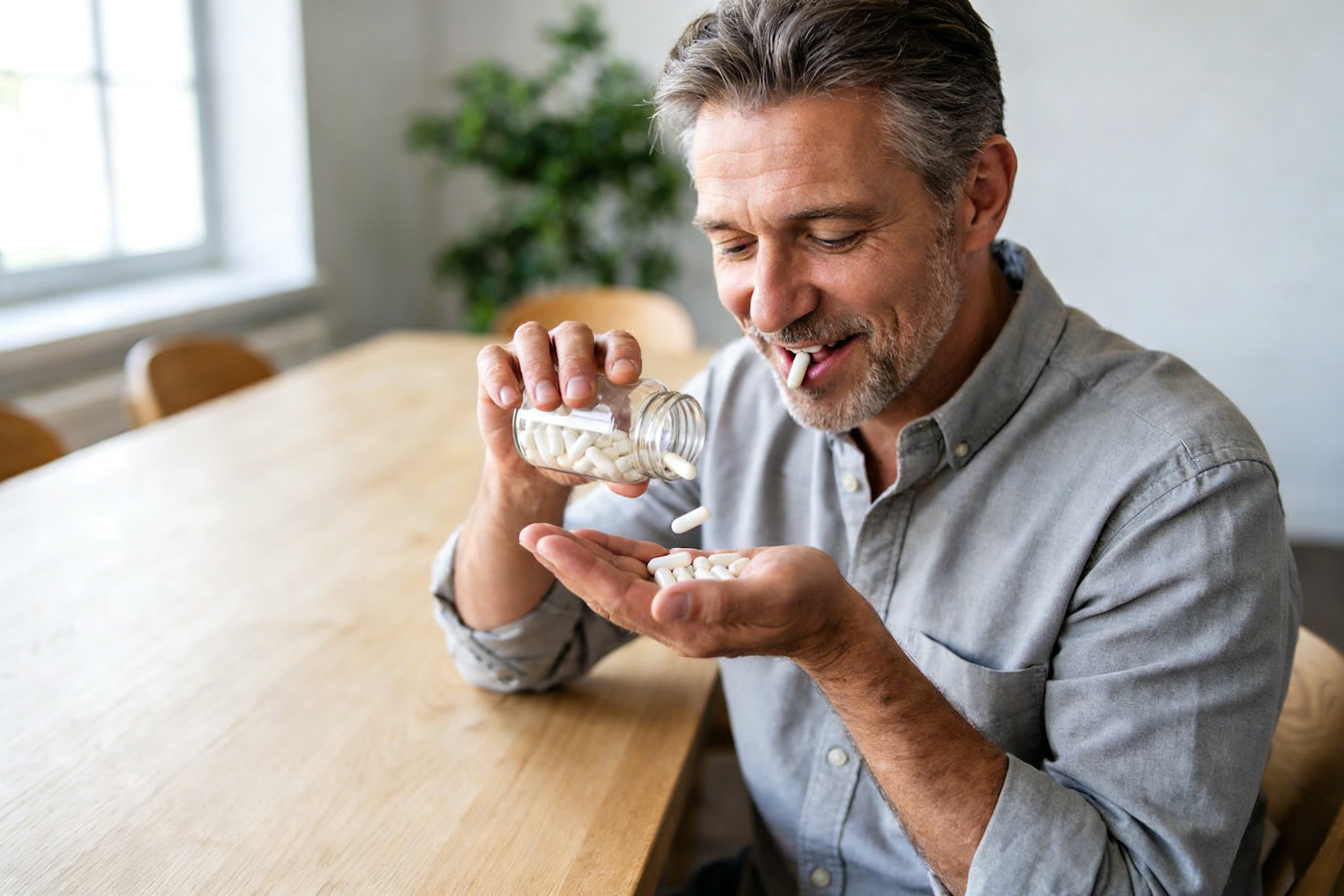
Men's Health: The Effects of Diuretics and Common Antihypertensive Drugs on Sexual Function and Coping Strategies
In-depth analysis of common knowledge about men's health medications: This section analyzes the effects of hydralazine, thiazide diuretics, furosemide, and spironolactone on erectile function and libido. It explores sexual dysfunction caused by hypokalemia due to diuretics and methods for correction, providing scientific protection for men's health for long-term users.
2026-03-24