
Midlife crisis – an opportunity to conceal oneself
middle age crisis
------ An opportunity to conceal oneself
In the movie "City Slicker," Billy Christon's character falls to the ground while celebrating his 39th birthday.
His boss wanted to know what was going on, but Christon's character just sat there, staring blankly ahead.
Finally, he raised his head, his face contorted in pain.
"You've reached a point in your life," he said, "where you ask yourself, 'Is this the best thing I've ever seen? The best moment I've ever felt? The best thing I've ever done? Were they really that great?'"
This is an accurate description of a midlife crisis.
Of course, Billy Christon's second self is by no means the only man nervously riding a horse across the canyon of middle age.
Ulysses, Dante, and Michelangelo visited there, as did Sigmund Freud and Carl Jung.
When Shakespeare was nearly 40, he switched from writing comedies to tragedies, and wrote King Lear, Macbeth, Hamlet, and Othello.
In all these stories, the protagonists eventually realize they've done something wrong, but it's too late.
A vague and uncomfortable feeling
What exactly constitutes a midlife crisis? Although its main manifestations are a general feeling of disappointment and a complaint of not having enough time, experts believe there is no simple definition for it.
Larry Bampass, a sociologist at the University of Wisconsin-Madison in Madison County, the leader of the National Census of Families, and MD, says that at least 40 things will happen to a person by middle age, ranging from unemployment to the death of one of their parents, decreased libido, divorce, or a serious illness.
"Middle-aged people today have it harder than ever before," says Ronald Revent, an education PhD who teaches psychology at Harvard Medical School.
He said that the Ozzie and Hariyat-style family life is no longer popular, and new demands placed on men are deepening their confusion as they transition into middle age.
"Middle age is a greater crisis for us than for our parents because of the enormous changes in the role of women and the structure of the American family," Dr. Revent said. "The roles that middle-aged men are expected to play today are very different from what they were expected to achieve growing up."
The traditional male superiority and female inferiority principle has been broken.
Many experts believe that the word "crisis" exaggerates the distress experienced by middle-aged men.
These experts also say that many prejudices about middle-aged men-such as their strong desire to retain their youth by pursuing younger women-may not be true.
"Admittedly, we all know men who abandon their wives for female secretaries at the age of 45, but men also abandon their wives when they are young," said Dr. Bampas.
In fact, Dr. Bampass's research clearly shows that the longer people are married, the lower their risk of divorce.
A survey conducted at the New England Institute of Research in Watertown, Massachusetts, by psychologist and PhD John McKinley, revealed that only 2% of the 1,700 middle-aged or older men surveyed currently have more than one sexual partner-a much lower probability than we might assume based on preconceived notions.
Leonard Feld, a psychologist and midlife and career expert at a private clinic in Los Angeles, says the word "crisis" serves more to prompt us to think about how to navigate the transition to middle age than simply to tell us that the transition has already occurred.
"Most people between 30 and 50 years old make significant adjustments based on their self-perception and how they feel about life," he said. "That's perfectly normal."
If they act impulsively in middle age, then that is a crisis.
If they abandon their wives, children, and friends, then this is a crisis.
"If they take these things into consideration, then it's a fascinating transition."
Grasp the main trunk of life
"Midlife regrets are an effective catalyst for personal growth"-this is a belief repeatedly emphasized by experts from many disciplines.
"I have to call it a midlife opportunity," says Martha Sinata, author of "Do What You Love and You'll Make a Fortune," a psychologist and PhD. "It's time to think about who I am and what I believe in."
It's time to ask myself questions like, "What do I really need?"
These are questions worth considering.
It means taking yourself seriously, perhaps for the first time.
To get rid of midlife pain to the greatest extent possible, you must first acknowledge its existence.
Therapists say there is a strong temptation to deny the problems that arise in middle age, because sometimes the answers are frightening.
"Accept whatever happens," Dr. Sinata said. "Try to relax amidst the chaos."
I'm sure you'll find something interesting in it.
Here are a few methods that can help achieve this goal.
Leisure is likely the best way to discover the most delightful technique for unlocking the subconscious mind: taking a break from this high-and-low lifestyle for a while.
"We need private and quiet places, and we need casual dating time for entertainment and leisure," Dr. Sinata said.
She suggests making a commitment to set aside some quiet time each day for solitude, reading inspiring poetry, or immersing yourself in nature when possible.
A more focused prayer and meditation retreat can also be valuable.
Dr. Sinata suggests that during those quiet times, you should use your brain as little as possible; the key is to daydream, refresh your mind, and meditate.
"The mind is unwilling to change," she said. "When you give yourself some breathing space, new insights, new ideas, and new optimism will emerge."
Write down your story. The art of journaling-which is essentially autobiography-is a major component of the middle-aged writing studio founded by theologian Dr. Jean-Jacques Bruij.
She is the deputy manager of a consulting firm called Midlife Mentoring in Newark, New Jersey.
"Looking closely at your life can revitalize you," she said. "You need to build peace, remember the good things, and learn to see things clearly."
To be honest, Dr. Sinata says, now is the time for you to start honestly telling who you really are.
In this matter, the most important thing is to find someone trustworthy and qualified to listen to the truth you have to tell.
This way, you can hear what you're saying with your own ears.
Friends are a possibility, but men don't have the same habit of intimate conversations as women.
However, better late than never.
Robert Simmons, a clinical psychologist and PhD at a private clinic in Alexandria, Virginia, says that many cities have men’s groups that aim to explore these kinds of issues.
Finding a specialist is another option.
If you are indeed seeking professional help, Dr. Sinata strongly recommends that you choose someone who can help you complete the entire process of rediscovering yourself, rather than someone who boasts about their medical skills by portraying your crisis as a problem that can be solved quickly and cleanly.
The same criteria apply to choosing friends as confidants, Dr. Feld said.
When you are choosing your "cabinet advisors," he said, "always remember that you are the president, and don't choose people who recommend themselves to you based on their own actions."
Exposing Yourself: Carl Zhang discovered, and subsequent research has confirmed, that middle-aged men tend to experience what he calls a "transition to sexual opposition."
In this transition, as women become increasingly independent and ambitious, men become increasingly impoverished, somber, and dependent on others.
"Some of the qualities we lose reappear in middle age," Dr. Bruij said.
Encouraging the resurgence of the qualities we've lost can generate an exciting sense of discovery and help eliminate the sense of loss that accompanies the transition to middle age.
Many men have gotten involved in community affairs: perhaps as their son's soccer coach, or as volunteers at the local food distribution center.
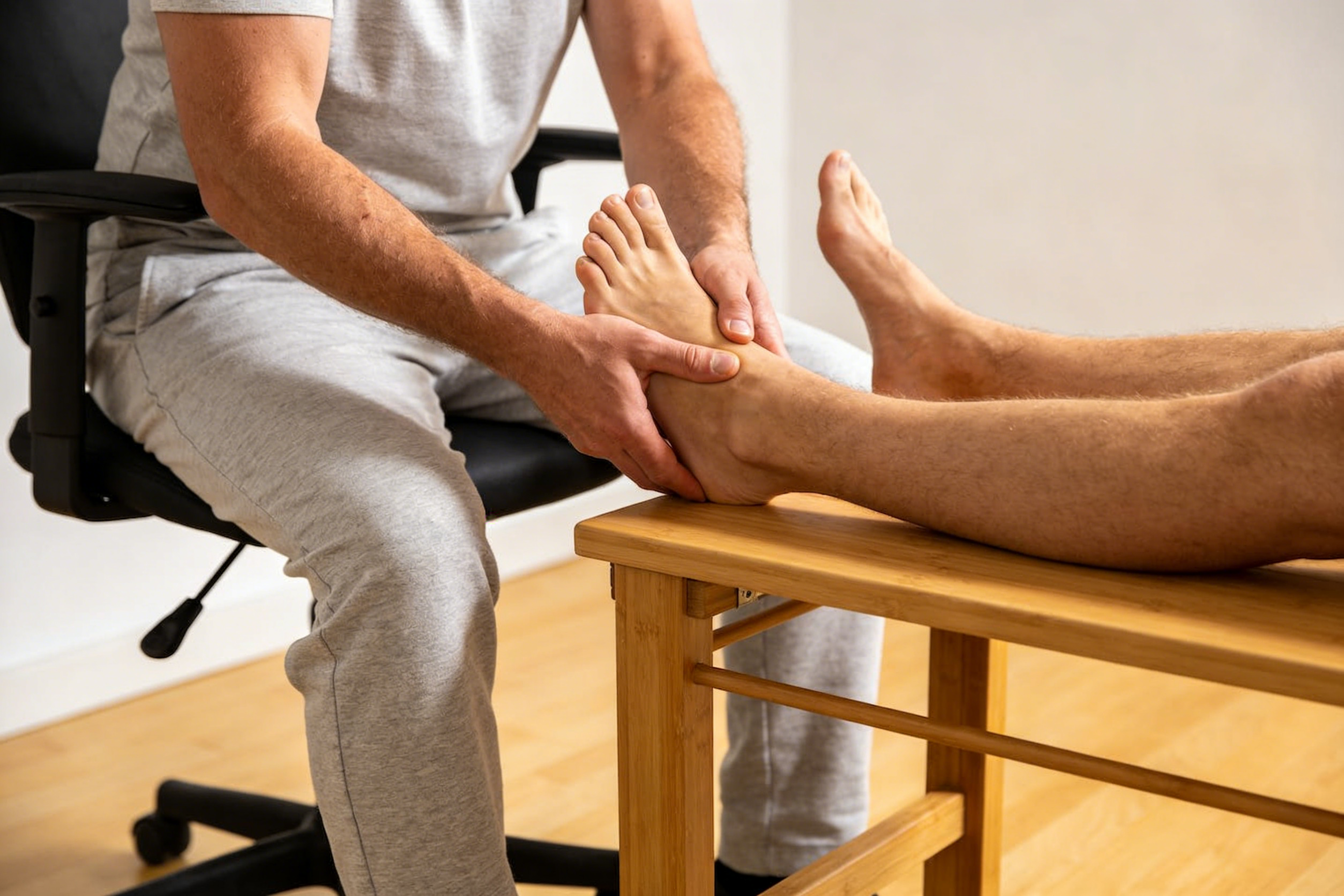
Men's health foot massage roller exercise method
This article introduces simple foot massage exercises using foot rollers and wooden sticks to promote blood circulation and metabolism, helping to relieve fatigue and strengthen lower limbs. The content analyzes the principles and methods from a health perspective, serving as a reference for those interested in men's health and daily maintenance.
2026-03-24
Men's Health Class: Analyzing Male Sexual Psychological Habits and Differences in Sexual Behavior
This article on men's health delves into five key psychological habits in men's sexuality, including the physiological basis of visual orientation, possessiveness, and the desire for touch. Through a scientific perspective on men's health, it analyzes the commonalities and differences between the sexes in the sexual response cycle, helping you build a harmonious and civilized understanding of intimate relationships.
2026-03-27
Men's Health: In-depth Analysis of Alcohol's Damage to the Whole Body and the Risk of Sexual Dysfunction
This article on men's health systematically explains the damage that alcohol, as a "legal drug," inflicts on the digestive, circulatory, nervous, and reproductive systems. It focuses on how alcohol disrupts hormonal balance, leading to gynecomastia, testicular atrophy, and decreased libido in men. Scientific advice on drinking is provided to help you avoid the risks of chronic alcoholism and malnutrition.
2026-03-24