
Male Health Knowledge about Priapism and Varicocele
Priapism
In sexually functional men, an erection lasting several minutes or even over an hour without discomfort is normal, provided there is sexual desire or stimulation. However, if the penis remains erect for several hours without sexual desire or stimulation, accompanied by penile pain, this is called priapism. This is a pathological condition and generally does not resolve on its own. Patients often experience difficulty urinating and require immediate treatment.
There are many causes of priapism, with the following being common:
Nervous system disorders. Conditions such as cerebrovascular disease, spinal cord tumors, inflammation, and trauma can overstimulate the spinal cord center or directly stimulate the dorsal nerve of the penis, leading to priapism.
Local penile disorders. Phimosis, gonorrhea, urethral stones, pelvic tumors, penile trauma, and obstruction of venous blood flow can also cause priapism.
Blood disorders. Chronic myeloid leukemia, polycythemia vera, and thalassemia can cause blood pooling in the corpora cavernosa of the penis, obstructing venous return and leading to priapism.
Drug-related factors: Antihypertensive drugs such as reserpine and prazosin, psychotropic drugs such as diazepam, methaqualone, and chlorpromazine, vasoactive drugs affecting the corpora cavernosa such as papaverine and phentolamine, and topical medications for the glans penis such as cocaine and ethanol can all cause priapism.
Priapism is an acute condition requiring immediate treatment as it can lead to serious consequences.
If an erection lasts for more than two days, blood clots will form in the corpora cavernosa; if it lasts for more than ten days, fibrosis of the corpora cavernosa will occur, resulting in serious organic damage and permanent erectile dysfunction. Therefore, it should not be taken lightly. Conservative treatment can be tried first; if ineffective, surgical treatment should be performed immediately.
Varicocele
Varicocele refers to the dilation, tortuosity, and elongation of the pampiniform plexus of veins in the spermatic cord. It is most common in the internal spermatic veins, and less common in the external spermatic veins and vas deferens veins. The incidence of left-sided varicocele is as high as 95%–99%, while the incidence is lower in the right side and bilaterally. This disease is most common in adolescents aged 16–25, with an incidence rate of approximately 15%.
The high sexual activity and abundant blood supply to the scrotum in adolescents are factors contributing to the high incidence in this age group. Other important contributing factors include prolonged standing, constipation leading to increased abdominal pressure, frequent non-orgasmic sexual arousal, and prolonged genital congestion. Retroperitoneal tumors, kidney tumors, and hydronephrosis can compress the internal spermatic veins, causing symptomatic or secondary varicocele. From an anatomical perspective, the left spermatic vein experiences greater blood flow resistance and lacks venous valves, making it prone to backflow. It is also susceptible to compression by the sigmoid colon, further hindering blood return. This explains the higher incidence of varicocele on the left side.
The most serious consequence of varicocele is its impact on fertility. This is primarily due to two factors. First, after varicocele develops, blood flows back into the scrotum. Since the body's blood temperature is higher than the scrotum's temperature, this raises the temperature of the testicles, impairing their ability to produce sperm. Second, metabolic waste products from the renal and adrenal veins, such as steroids and catecholamines, can flow backward into the testicles, affecting testicular function. Furthermore, increased levels of prostaglandins and serotonin in the blood also affect sperm motility. All these factors can lead to infertility.
Studies show that 30%–40% of male infertility cases are caused by varicocele. This demonstrates the significant harm this disease can cause. Therefore, I urge men suffering from varicocele to seek treatment as soon as possible.

A Complete Guide to Male Health Exercises and Wellness Techniques
This book provides a detailed introduction to the complete set of male health exercises, including "Hands to the Chest," "Arms Stretching Across the Body," and "Tiger Pouncing on Its Prey." It combines breathing and mental focus to help regulate the body, mind, and breath, improve physical condition, and strengthen muscles and bones, providing a scientific and systematic daily health maintenance method for men.
2026-03-24
Men's Health Slow Static Stretching Exercises Full Body Flexibility Training Guide
This article introduces slow, static stretching exercises suitable for daily practice. Through multiple simple movements, it improves flexibility and joint range of motion, helps relax muscles, and prevents soreness. The content scientifically analyzes the key points of each movement, making it a practical reference for those interested in men's health and exercise.
2026-03-24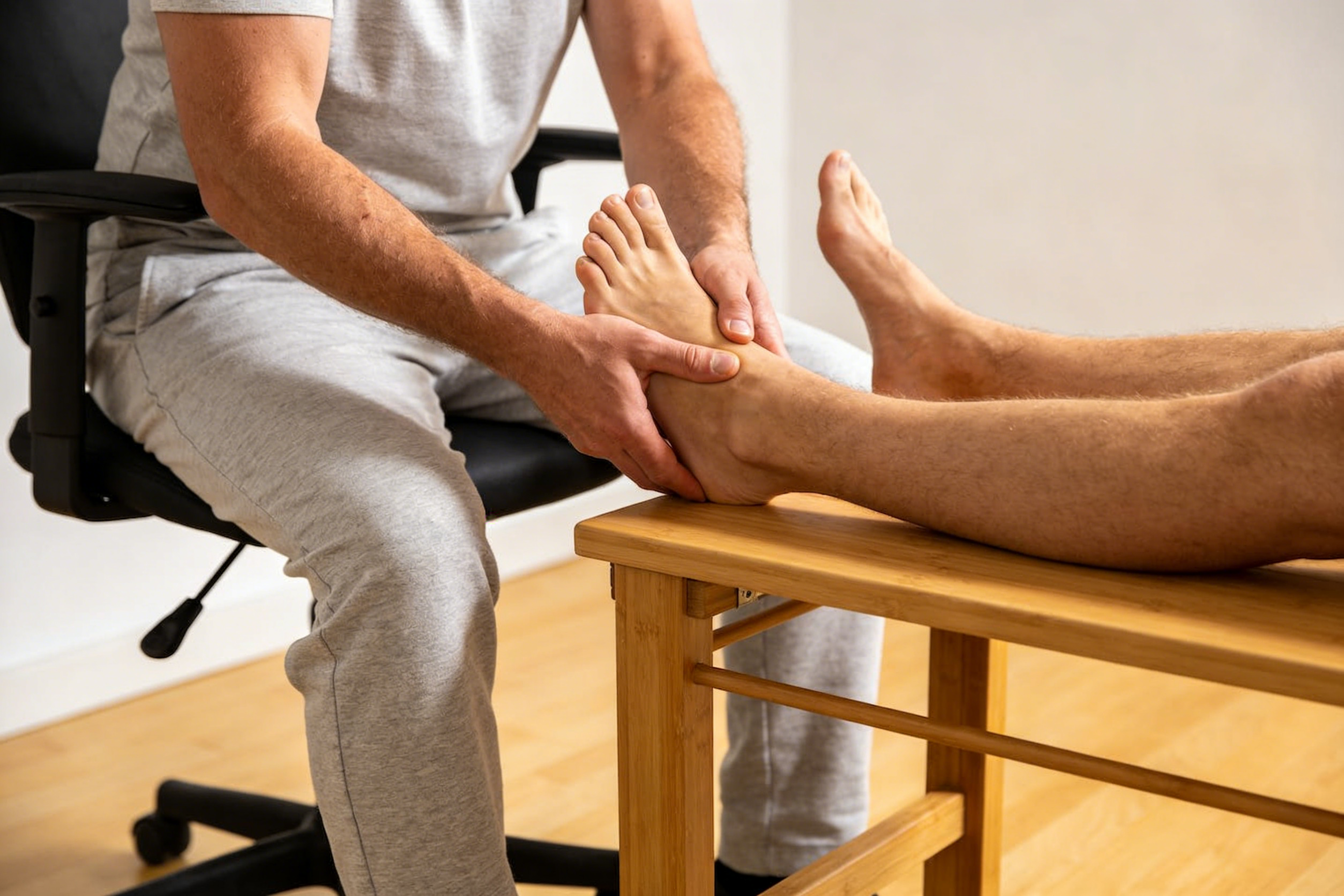
Men's health foot massage roller exercise method
This article introduces simple foot massage exercises using foot rollers and wooden sticks to promote blood circulation and metabolism, helping to relieve fatigue and strengthen lower limbs. The content analyzes the principles and methods from a health perspective, serving as a reference for those interested in men's health and daily maintenance.
2026-03-24